
![Drug Shortage Management: How Smart Pharmacy Software Prevents Stockouts [2026]](/_next/image?url=%2Finfographics%2Fdrug-shortage-management-stats.png&w=2048&q=75)
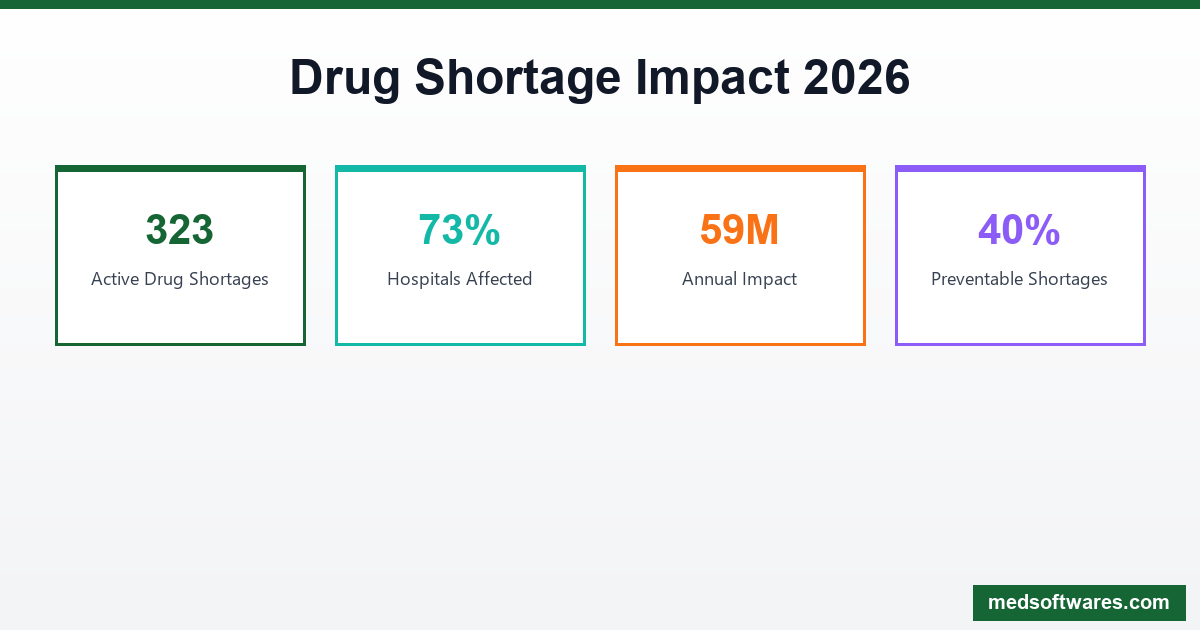
Drug shortages continue to challenge healthcare facilities worldwide. With 323 active shortages affecting 73% of hospitals, pharmacies need smarter tools to predict, prevent, and manage medication availability. Here's how modern pharmacy software helps.
The Drug Shortage Crisis in 2026
Current Landscape
Global Statistics:
- 323 active drug shortages in the US alone
- 73% of hospitals experiencing shortage impacts
- $359 million annual cost to healthcare systems
- 40% of shortages are preventable with better planning
Categories Most Affected:
- Injectable medications (40% of shortages)
- Antibiotics and antimicrobials
- Oncology drugs
- Anesthetics
- Emergency medications
Why Shortages Happen
Manufacturing Issues:
- Quality control problems
- Production capacity limits
- Raw material shortages
- Facility shutdowns
Supply Chain Disruptions:
- Transportation delays
- Import restrictions
- Regulatory changes
- Natural disasters
Demand Fluctuations:
- Seasonal illness spikes
- Pandemic-related surges
- New treatment guidelines
- Hoarding behavior
Impact on Healthcare Facilities
Clinical Consequences
Patient Care:
- Treatment delays
- Alternative medication use
- Increased adverse events
- Longer hospital stays
Clinical Staff:
- Time spent finding alternatives
- Protocol modifications
- Documentation burden
- Communication challenges
Financial Consequences
Direct Costs:
- Higher prices for alternatives
- Rush shipping fees
- Staff overtime
- Waste from expired alternatives
Indirect Costs:
- Treatment delays
- Extended hospital stays
- Patient transfers
- Reputation damage
How Software Helps Manage Shortages
1. Predictive Analytics
Early Warning Signs:
- Unusual ordering patterns from suppliers
- Industry shortage announcements
- Price fluctuation alerts
- Lead time changes
Demand Forecasting:
- Historical usage patterns
- Seasonal trends
- Disease outbreak correlation
- Treatment protocol changes
2. Inventory Optimization
Smart Stock Levels:
- Dynamic safety stock based on risk
- Critical medication buffers
- ABC analysis for prioritization
- Supplier diversification tracking
Usage Monitoring:
- Real-time consumption tracking
- Variance from expected use
- Department-level analysis
- Waste identification
3. Alternative Management
Substitution Support:
- Therapeutic equivalents database
- Dose conversion calculations
- Formulary alternatives
- Cross-reference checking
Protocol Updates:
- Alternative treatment guidelines
- Staff notification system
- Documentation templates
- Approval workflows
4. Supplier Management
Multi-Supplier Strategy:
- Secondary supplier setup
- Price comparison
- Lead time tracking
- Performance scoring
Communication:
- Automated shortage queries
- Expected availability updates
- Alternative offers
- Contract management
PharmaPOS Shortage Management Features
PharmaPOS includes features to help independent pharmacies manage shortages:
Inventory Intelligence
Low Stock Alerts:
- Customizable thresholds
- Critical item flagging
- Reorder point automation
- Lead time consideration
Usage Tracking:
- Daily consumption reports
- Trend analysis
- Unusual pattern detection
- Forecast vs actual
Supplier Management
Multiple Suppliers:
- Easy supplier switching
- Price comparison
- Order history by supplier
- Performance tracking
Purchase Orders:
- Quick reorder generation
- Supplier-specific pricing
- Order tracking
- Delivery confirmation
Customer Communication
Availability Updates:
- Stock status visibility
- Wait list management
- Notification when available
- Alternative suggestions
HospitalOS Pharmacy Module
HospitalOS provides comprehensive shortage management for hospital pharmacies:
Hospital-Wide Visibility
Central Dashboard:
- All shortages at a glance
- Department impact assessment
- Critical medication status
- Alternative availability
Usage Analytics:
- Consumption by department
- Prescriber patterns
- Treatment protocol analysis
- Waste tracking
Clinical Integration
Prescriber Alerts:
- Real-time shortage notifications
- Alternative suggestions in EHR
- Formulary status indicators
- Approval workflows
Treatment Protocols:
- Alternative medication guidelines
- Dosing adjustments
- Clinical considerations
- Staff training materials
Supply Chain Tools
Par Level Management:
- Dynamic adjustment based on risk
- Critical item buffers
- Usage-based optimization
- Seasonal adjustments
Vendor Management:
- Multi-vendor contracts
- Emergency supplier network
- Price tracking
- Performance metrics
Shortage Management Best Practices
Prevention Strategies
1. Diversify Suppliers
- Never rely on single source
- Establish backup relationships
- Compare pricing regularly
- Track performance
2. Monitor Industry News
- FDA shortage announcements
- Manufacturer communications
- Industry publications
- Professional networks
3. Optimize Inventory
- ABC classification for priorities
- Safety stock for critical items
- Regular cycle counting
- Expiry management
4. Forecast Demand
- Historical usage analysis
- Seasonal patterns
- Protocol changes
- External factors
Response Strategies
When Shortage Occurs:
-
Assess Impact
- Current stock level
- Daily consumption rate
- Days of supply remaining
- Patient impact assessment
-
Identify Alternatives
- Therapeutic equivalents
- Dosage form changes
- Treatment protocol modifications
- Manufacturer alternatives
-
Communicate
- Notify clinical staff
- Update protocols
- Inform patients
- Document decisions
-
Conserve Supply
- Restrict to essential use
- Review all orders
- Prevent waste
- Consider dose optimization
-
Source Alternatives
- Contact other suppliers
- Check regional availability
- Consider compounding
- Emergency purchases
Recovery Strategies
When Stock Returns:
-
Verify Supply Stability
- Confirm sustainable supply
- Check for ongoing issues
- Verify pricing
-
Restore Normal Operations
- Return to standard protocols
- Update formulary status
- Communicate to staff
-
Learn and Improve
- Document experience
- Update safety stocks
- Revise supplier strategy
- Improve forecasting
Technology Implementation Guide
Phase 1: Assessment (Week 1)
Evaluate Current State:
- How do you learn about shortages now?
- What's your average response time?
- How much do shortages cost you?
- What tools do you currently use?
Define Requirements:
- Critical medications list
- Safety stock policies
- Supplier relationships
- Reporting needs
Phase 2: Setup (Week 2)
Configure System:
- Import medication formulary
- Set reorder points
- Configure suppliers
- Define alert thresholds
Establish Baselines:
- Current inventory levels
- Average consumption
- Lead times
- Critical items
Phase 3: Training (Week 3)
Staff Education:
- System navigation
- Alert response
- Shortage protocols
- Documentation
Process Documentation:
- Standard operating procedures
- Escalation pathways
- Communication templates
- Decision trees
Phase 4: Go-Live (Week 4+)
Launch:
- Enable shortage monitoring
- Activate alerts
- Begin reporting
- Monitor adoption
Optimize:
- Refine thresholds
- Adjust processes
- Expand coverage
- Measure results
Measuring Success
Key Performance Indicators
| Metric | Target | How to Improve | |--------|--------|----------------| | Shortage Response Time | Under 24 hours | Faster alerts, protocols | | Stockout Events | Zero for critical | Safety stock, monitoring | | Alternative Availability | 100% for critical | Formulary planning | | Cost Impact | 50% reduction | Better sourcing, less rush orders |
Reports to Track
Daily:
- Low stock alerts
- Critical item status
- Expected deliveries
Weekly:
- Shortage status summary
- Usage trends
- Supplier performance
Monthly:
- Cost analysis
- Shortage history
- Prevention metrics
- Staff compliance
Regional Considerations
Africa
Unique Challenges:
- Import dependencies
- Currency fluctuations
- Longer lead times
- Limited local manufacturing
Solutions:
- Extended safety stocks
- Regional supplier networks
- Currency hedging alerts
- Government liaison
Developing Markets
Common Issues:
- Unreliable supply chains
- Limited supplier options
- Cash flow constraints
- Storage challenges
Software Support:
- Offline capability
- Simplified workflows
- Mobile alerts
- Local supplier integration
Getting Started
Ready to improve your shortage management?
Step 1: Assess Your Risk
- List critical medications
- Evaluate current processes
- Calculate shortage costs
- Identify improvement areas
Step 2: Request a Demo
Contact us to see:
- Inventory intelligence features
- Alert configuration
- Reporting dashboards
- Supplier management
Step 3: Implementation
We'll help you:
- Configure your formulary
- Set up alerts
- Train your team
- Optimize over time
Conclusion
Drug shortages aren't going away, but their impact on your facility can be minimized. With 40% of shortages preventable through better planning, smart pharmacy software is essential.
PharmaPOS and HospitalOS provide:
- Predictive alerts for early warning
- Smart inventory with dynamic safety stocks
- Supplier management for diversification
- Alternative tracking for rapid response
- One-time pricing with no subscription fees
Don't let shortages catch you off guard.
![Free Pharmacy Software vs Paid: Complete Comparison Guide [2026]](/_next/image?url=%2Finfographics%2Ffree-vs-paid-pharmacy-software.png&w=2048&q=75)
![Independent Pharmacy Software: Complete Guide for Small Pharmacies [2026]](/_next/image?url=%2Finfographics%2Fpharmacy-software-comparison.png&w=2048&q=75)
![Pharmacy Software ROI: Statistics That Prove the Investment [2026 Data]](/_next/image?url=%2Finfographics%2Fpharmacy-software-statistics.png&w=2048&q=75)