
![Healthcare AI & Chatbots: What 230 Million Weekly Users Mean for Your Practice [2026]](/_next/image?url=%2Finfographics%2Fhealthcare-ai-stats-2026.png&w=2048&q=75)
A seismic shift is happening in healthcare. Over 230 million people now ask health questions to AI chatbots like ChatGPT every week. Patients are consulting "Dr. AI" before—and sometimes instead of—visiting their healthcare providers.
The Numbers Tell the Story
AI Health Queries: Explosive Growth
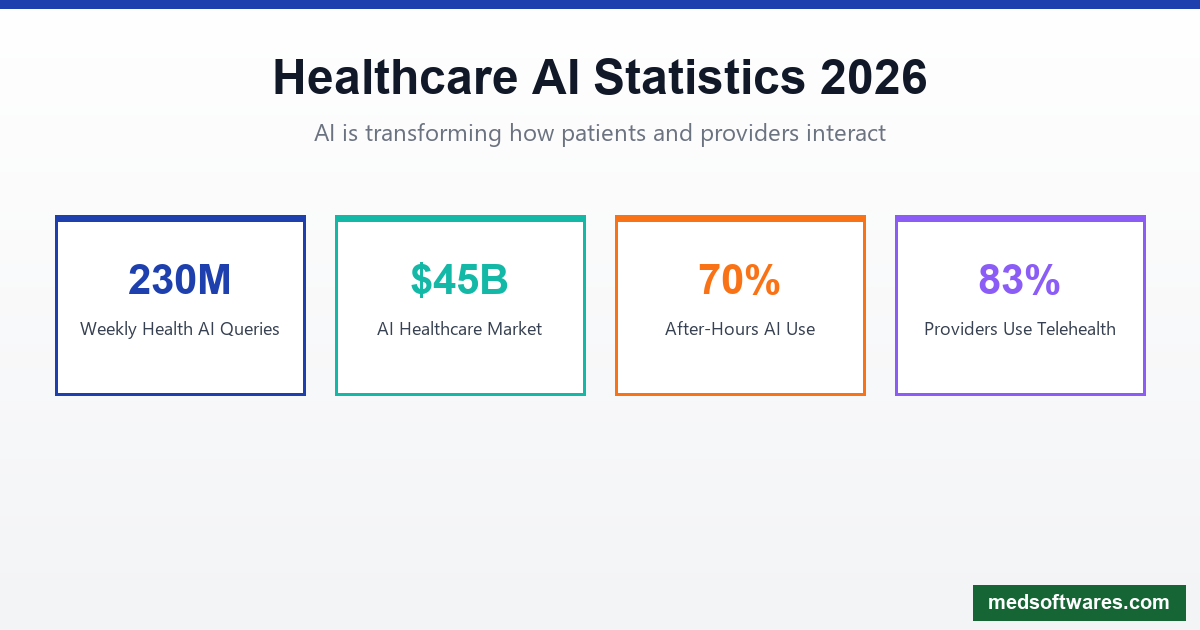
- 230 million health and wellness questions asked on ChatGPT weekly
- 1.6-1.9 million health insurance questions per week
- 70% of healthcare AI conversations happen outside clinic hours
- 1 in 4 patients have used AI chatbots for health inquiries
Why Patients Turn to AI
According to recent research, patients use AI chatbots for:
- Symptom assessment - Understanding what might be wrong
- Severity evaluation - Deciding if emergency care is needed
- Treatment guidance - Post-diagnosis questions
- Insurance help - Comparing plans, understanding coverage
- Medication questions - Side effects, interactions
- After-hours support - 70% of queries are outside clinic hours
What This Means for Healthcare Providers
Patient Expectations Are Changing
Patients now expect:
- 24/7 availability for basic questions
- Instant responses to common inquiries
- Digital-first communication options
- Informed discussions - they've already researched online
The "Virtual Doctor" Question
2026 is bringing clarity on how much healthcare can be delivered through AI vs. requiring human interaction. Key considerations:
AI Works Well For:
- General health information
- Symptom checking (with appropriate disclaimers)
- Appointment scheduling
- Medication reminders
- Insurance navigation
- Follow-up care instructions
Human Providers Essential For:
- Diagnosis and treatment decisions
- Physical examinations
- Complex medical situations
- Emotional support and empathy
- Personalized treatment plans
- Controlled substance prescriptions
Accuracy Concerns
AI chatbots can "hallucinate" - providing confident but incorrect information:
- Google AI advised pancreatic cancer patients to avoid high-fat foods (not recommended)
- A surgeon reported a patient brought ChatGPT output claiming 45% pulmonary embolism risk from a medication—a misapplied statistic from a tuberculosis study
The lesson: AI supplements but doesn't replace professional healthcare.
Major Healthcare AI Launches in 2026
OpenAI: ChatGPT Health (January 7)
- Dedicated health features
- Structured symptom reporting
- Health insurance assistance
Google: MedGemma 1.5 (January 13)
- 3D CT and MRI scan interpretation
- Medical image analysis
- Research-focused initially
Anthropic: Claude for Healthcare (January 11)
- HIPAA-compliant connectors
- Clinical workflow integration
- Provider-focused tools
FDA Regulatory Status
None of these tools currently have FDA clearance as medical devices. The regulatory framework for medical AI remains evolving.
How Healthcare Facilities Should Respond
1. Embrace Digital Communication
Patients expect digital options:
- Patient portals for messages and records
- Online scheduling for appointments
- Telemedicine for appropriate visits
- SMS/WhatsApp for reminders and follow-ups
2. Provide Reliable Information Sources
Combat misinformation by:
- Creating educational content for your patients
- Sharing trusted resources on your website
- Addressing AI-generated questions in consultations
- Being open about AI's limitations
3. Integrate AI Thoughtfully
Consider AI for:
- Administrative tasks (scheduling, reminders)
- Initial symptom triage
- FAQ responses
- Insurance verification
- Documentation assistance
4. Focus on What Humans Do Best
Double down on:
- Personalized patient relationships
- Complex clinical decision-making
- Emotional support and communication
- Physical examination skills
- Treatment plan customization
MedSoftwares: AI-Ready Healthcare Software
HospitalOS Features for the AI Era
HospitalOS helps facilities meet modern patient expectations:
Patient Communication:
- Patient portal access
- Appointment reminders
- Follow-up scheduling
- Digital prescription records
Telemedicine Integration:
- Built-in video consultations
- Virtual waiting rooms
- Remote patient monitoring
- Low-bandwidth mode for developing markets
Clinical Decision Support:
- Drug interaction checking
- Allergy alerts
- Dosage guidance
- Protocol reminders
Documentation Efficiency:
- Template-based notes
- Voice-to-text compatible
- Quick clinical documentation
- Automated record organization
PharmaPOS for Pharmacy AI Readiness
PharmaPOS includes features patients expect:
Drug Information:
- Drug interaction checker
- Patient allergy cross-reference
- Dosage information
- Contraindication alerts
Patient Engagement:
- Refill reminders
- Prescription history access
- Loyalty program integration
- Digital receipts
Preparing for AI-Augmented Healthcare
Short-Term (2026)
-
Audit digital capabilities
- Do you have a patient portal?
- Can patients book online?
- Is telemedicine available?
-
Train staff on AI awareness
- Understand what patients are reading online
- Know how to address AI-generated questions
- Recognize misinformation patterns
-
Implement basic automation
- Appointment reminders
- Follow-up scheduling
- FAQ responses
Medium-Term (2027-2028)
-
Integrate clinical AI tools
- Documentation assistance
- Decision support systems
- Predictive analytics
-
Develop AI policies
- When to use AI vs. human judgment
- Patient communication about AI
- Data privacy considerations
Long-Term (2029+)
- Personalized AI integration
- Patient-specific predictions
- Treatment optimization
- Population health management
Key Takeaways
- AI is here to stay - 230M weekly queries prove patient adoption
- Patients are informed - They research before and after visits
- 24/7 expectations - 70% of AI queries are after hours
- Accuracy matters - AI can hallucinate; human oversight essential
- Adapt or fall behind - Digital-first practices will win
Conclusion
The healthcare AI revolution isn't coming—it's here. With 230 million people asking AI chatbots health questions weekly, patient expectations have fundamentally changed.
Healthcare facilities that embrace digital tools, provide reliable information, and focus on what humans do best will thrive. Those that don't will find patients seeking care elsewhere.
MedSoftwares provides the digital foundation for AI-ready healthcare with HospitalOS and PharmaPOS.
Request a Demo to see how we can help your facility meet modern patient expectations.
Sources
- OpenAI ChatGPT Health Launch - TechCrunch
- ChatGPT Health Usage - Axios
- Google AI Health Concerns - Euronews


