

Patient engagement has evolved from a healthcare buzzword to a measurable, technology-driven discipline. In 2026, patient engagement platform software is essential for healthcare organizations aiming to improve outcomes, reduce costs, and meet the expectations of digitally savvy patients. Research consistently shows that engaged patients have better health outcomes, lower readmission rates, and higher satisfaction scores — making investment in digital patient engagement tools a clinical and financial imperative.
This comprehensive guide covers everything you need to know about patient engagement software in 2026, including key features, platform comparisons, implementation strategies, and the emerging technologies reshaping how patients interact with their healthcare providers.
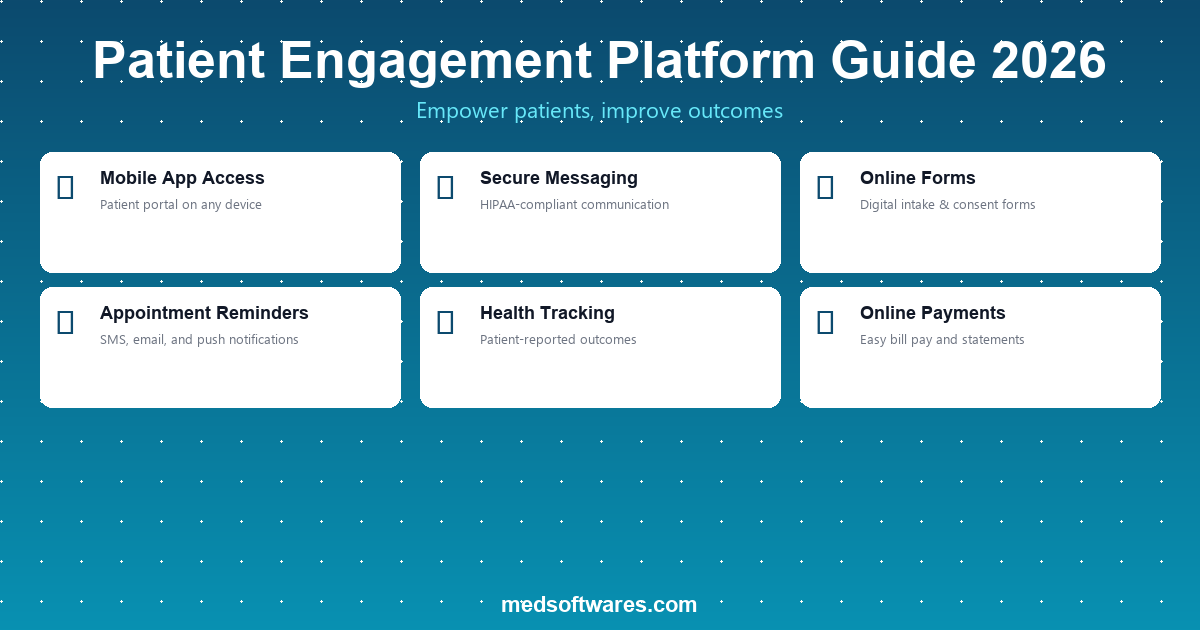
Quick Comparison: Top Patient Engagement Platforms 2026
| Feature | MyChart (Epic) | Athenahealth | Relatient | Luma Health | HospitalOS Portal | |---|---|---|---|---|---| | Patient Portal | Advanced | Strong | Moderate | Strong | Integrated | | Appointment Scheduling | Yes | Yes | Yes | Advanced | Yes | | Secure Messaging | Yes | Yes | Limited | Yes | Yes | | Online Bill Pay | Yes | Yes | No | Yes | Yes | | Health Education | Extensive | Moderate | Limited | Moderate | Integrated | | Satisfaction Surveys | Yes | Yes | Yes | Yes | Yes | | Care Plan Adherence | Advanced | Moderate | Limited | Moderate | Yes | | Mobile App | Yes | Yes | No | Yes | Yes | | Multilingual Support | 20+ Languages | 5 Languages | English Only | 10+ Languages | Configurable | | Pricing | $$$$ | $$$ | $$ | $$$ | $$ |
What Is Patient Engagement Software?
Patient engagement software encompasses the digital tools and platforms that facilitate active participation of patients in their own healthcare. These solutions bridge the gap between clinical visits, enabling continuous interaction between patients and providers through portals, messaging, scheduling, education, and self-service tools.
A comprehensive patient experience platform typically includes:
- Patient portals for accessing medical records, lab results, and visit summaries
- Online appointment scheduling with real-time availability and self-service booking
- Automated reminders via SMS, email, and push notifications to reduce no-shows
- Secure messaging for HIPAA-compliant communication between patients and care teams
- Online bill pay with transparent pricing and payment plan options
- Health education content tailored to patient conditions and care plans
- Satisfaction surveys to measure and improve the patient experience
- Care plan adherence tools that track medication compliance and follow-up actions
Why Patient Engagement Matters in 2026
Clinical Impact
Studies published in 2025-2026 demonstrate clear links between patient engagement and outcomes:
- 30% reduction in hospital readmissions among patients who actively use engagement tools
- 25% improvement in medication adherence with automated reminder systems
- 40% decrease in appointment no-shows when digital scheduling and reminders are deployed
- 20% improvement in chronic disease management outcomes for engaged patients
Financial Impact
The financial case for digital patient engagement is equally compelling:
- Revenue increase of 10-15% from reduced no-shows and improved scheduling efficiency
- Billing cost reduction of 20-30% through online bill pay and automated statements
- Staff time savings of 15-20 hours per week from automated patient communication
- Higher patient retention rates leading to increased lifetime patient value
Regulatory Requirements
Government programs increasingly mandate patient engagement capabilities:
- CMS Promoting Interoperability Program requires patient portal access and data sharing
- MIPS/APM quality measures include patient engagement metrics
- ONC Information Blocking Rule mandates patient access to electronic health information
- State-level regulations requiring price transparency and online access to records
Core Features Deep Dive
Patient Portals
The patient portal is the foundation of any engagement platform. In 2026, leading portals offer:
Essential Portal Features:
- View and download medical records, including visit notes, lab results, and imaging reports
- Access immunization history and medication lists
- View care plans with actionable steps and progress tracking
- Download and share health records in standard formats (C-CDA, FHIR)
- Proxy access for caregivers and parents managing dependents
Advanced Portal Capabilities:
- AI-powered health insights that explain lab results in plain language
- Symptom checkers integrated into the portal for self-triage
- Virtual visit launch directly from the portal interface
- Device integration for wearables and home monitoring equipment
- Personalized dashboards that surface relevant information based on patient conditions
Appointment Scheduling
Modern patient communication tools for scheduling go far beyond simple calendar booking:
- Real-time availability showing open slots across providers and locations
- Intelligent matching that considers provider specialty, insurance, and patient preferences
- Waitlist management with automatic notifications when earlier slots become available
- Multi-visit scheduling for patients needing a series of appointments
- Pre-visit digital intake with forms and questionnaires completed before arrival
- Check-in kiosk integration for seamless arrival at the facility
Automated Reminders and Notifications
Reducing no-shows and improving preparation through automated outreach:
| Reminder Type | Timing | Channel | Impact | |---|---|---|---| | Appointment Confirmation | At booking | Email + SMS | Sets expectations | | Preparation Instructions | 3-5 days before | Email | Reduces cancellations | | Day-Before Reminder | 24 hours before | SMS | Reduces no-shows by 30% | | Day-Of Reminder | 2 hours before | SMS + Push | Reduces late arrivals | | Post-Visit Follow-Up | 1-2 hours after | SMS | Captures feedback | | Preventive Care Alerts | Based on schedule | Email | Fills care gaps | | Medication Reminders | Daily/Custom | Push + SMS | Improves adherence |
Secure Messaging
HIPAA-compliant messaging is a cornerstone of the patient communication tools category:
- Asynchronous messaging allowing patients to send questions at their convenience
- Message routing to the appropriate care team member based on topic
- Attachment support for sharing photos, documents, and forms
- Read receipts and response time tracking for quality assurance
- Template responses for common questions to improve staff efficiency
- Escalation workflows for urgent messages requiring immediate attention
- Group messaging for care teams managing complex patients
Online Bill Pay
Financial engagement is a critical but often overlooked component:
- Real-time balance display showing all outstanding charges
- Itemized statements with clear descriptions of services
- Payment plan setup with flexible installment options
- Insurance explanation showing what was billed, what insurance paid, and patient responsibility
- Multiple payment methods including credit card, ACH, HSA/FSA, and mobile wallets
- Automated payment reminders with escalation for overdue balances
- Price transparency tools showing estimated costs before services are rendered
Health Education
Empowering patients with knowledge improves outcomes and satisfaction:
- Condition-specific education automatically assigned based on diagnosis codes
- Medication information including side effects, interactions, and proper usage
- Pre- and post-procedure guides with step-by-step instructions
- Video libraries covering common conditions and treatments
- Multilingual content accessible to diverse patient populations
- Health literacy optimization ensuring content is readable at appropriate levels
- Interactive tools such as symptom trackers, food diaries, and exercise logs
Satisfaction Surveys
Measuring the patient experience enables continuous improvement:
- Real-time survey delivery within hours of the appointment
- CAHPS-aligned questions for standardized benchmarking
- Custom survey builders for tracking organization-specific metrics
- Sentiment analysis using natural language processing on open-ended responses
- Provider-level scoring enabling individual performance tracking
- Action alerts triggered by low scores for immediate follow-up
- Trend reporting showing satisfaction changes over time
Care Plan Adherence
Helping patients follow their care plans between visits:
- Digital care plans with clear goals, tasks, and timelines
- Progress tracking that patients and providers can monitor together
- Medication adherence monitoring with refill reminders and compliance scores
- Remote monitoring integration for vital signs, blood glucose, weight, and other metrics
- Motivational messaging encouraging patients to stay on track
- Care team alerts when adherence drops below threshold levels
- Outcomes tracking connecting adherence to clinical improvements
Implementation Best Practices
Phase 1: Foundation (Months 1-3)
- Deploy patient portal with core features (records access, messaging, scheduling)
- Configure automated appointment reminders (SMS and email)
- Set up online bill pay and electronic statements
- Train front-desk staff on patient enrollment workflows
- Establish patient portal adoption targets and tracking
Phase 2: Engagement Expansion (Months 4-6)
- Launch satisfaction surveys with real-time alerting
- Deploy health education content library
- Enable care plan adherence tools for chronic disease patients
- Integrate wearable devices and remote monitoring
- Begin segmented outreach campaigns for preventive care
Phase 3: Optimization (Months 7-12)
- Analyze engagement data to identify high-impact interventions
- Implement AI-powered personalization for content and communication timing
- Expand multilingual support based on patient demographics
- Deploy advanced analytics dashboards for leadership
- Refine workflows based on patient feedback and usage patterns
Measuring Patient Engagement Success
Track these key performance indicators to measure platform effectiveness:
| KPI | Target | Measurement | |---|---|---| | Portal Adoption Rate | 60%+ of active patients | Monthly active users / Total patients | | Appointment No-Show Rate | Below 5% | No-shows / Total scheduled | | Message Response Time | Under 4 hours | Average time to first response | | Online Bill Pay Adoption | 40%+ of statements | Online payments / Total statements | | Patient Satisfaction Score | 4.5+ out of 5 | Average survey rating | | Care Plan Compliance | 70%+ | Completed tasks / Assigned tasks | | Preventive Care Gap Closure | 80%+ | Completed screenings / Due screenings |
Overcoming Common Engagement Barriers
Digital Literacy Challenges
Not all patients are comfortable with technology. Address this by:
- Offering in-person enrollment assistance during check-in
- Providing printed quick-start guides with screenshots
- Creating video tutorials accessible from the portal homepage
- Designating digital navigators on staff to help patients by phone
- Supporting proxy access so tech-savvy family members can assist
Language and Accessibility
Inclusive engagement requires addressing diverse needs:
- Multilingual interfaces with professional medical translations
- Screen reader compatibility meeting WCAG 2.1 AA standards
- Large text options and high-contrast display modes
- Audio content for patients with reading difficulties
- Cultural sensitivity in health education materials
Provider Adoption
Patient engagement tools only work when providers actively participate:
- Integrate messaging into existing clinical workflows rather than creating separate tasks
- Show providers the time-saving benefits with data on reduced phone calls and better-prepared patients
- Set response time expectations and provide templates for common scenarios
- Recognize high-engagement providers to encourage adoption across the organization
How to Choose the Right Patient Engagement Platform
Evaluation Criteria
When selecting a patient experience platform, prioritize these factors:
- EHR Integration Depth: Does the platform integrate natively with your EHR or require middleware?
- Mobile Experience: Is there a dedicated mobile app, and is it well-rated by patients?
- Customization: Can you brand the portal, customize workflows, and add organization-specific content?
- Scalability: Will the platform grow with your organization from one location to many?
- Analytics: Does the platform provide actionable insights, not just raw data?
- Support: What level of technical support and customer success resources are included?
- Security: Does the platform meet all HIPAA requirements with documented compliance?
- Cost: What is the total cost including implementation, per-patient fees, and messaging costs?
Red Flags to Avoid
- Platforms that require patients to create accounts with separate credentials (SSO is preferred)
- Vendors without a published HIPAA compliance framework
- Systems with no mobile-responsive design or dedicated app
- Platforms that do not support bidirectional EHR data flow
- Vendors who cannot provide references from similar-sized healthcare organizations
Why Consider HospitalOS and MedSoftwares
HospitalOS delivers a fully integrated patient engagement platform as a core component of its hospital management system — not as an add-on or third-party integration. This means patient engagement features work seamlessly with clinical, financial, and administrative workflows.
Key patient engagement capabilities in HospitalOS include:
- Integrated patient portal with records access, messaging, and self-service scheduling
- Automated reminders via SMS, email, and WhatsApp to reduce no-shows
- Online bill pay with flexible payment options and transparent pricing
- Health education library with condition-specific content delivered automatically
- Post-visit surveys with real-time NPS tracking and alert escalation
- Care plan tracking that patients and providers can monitor collaboratively
- Multilingual support configurable for any patient population
PharmaPOS extends patient engagement into the pharmacy, with medication adherence reminders, refill notifications, and prescription status tracking that keeps patients connected throughout their care journey.
Discover how MedSoftwares can transform your patient engagement strategy. Contact us today for a personalized demo tailored to your organization's needs.
![Patient Portal Software: Complete Guide for Hospitals & Clinics [2026]](/_next/image?url=%2Finfographics%2Fpatient-portal-benefits-stats.png&w=2048&q=75)

