
![mHealth Mobile Apps for Hospitals & Clinics: Complete Guide [2026]](/_next/image?url=%2Finfographics%2Fmhealth-apps-market-2026.png&w=2048&q=75)
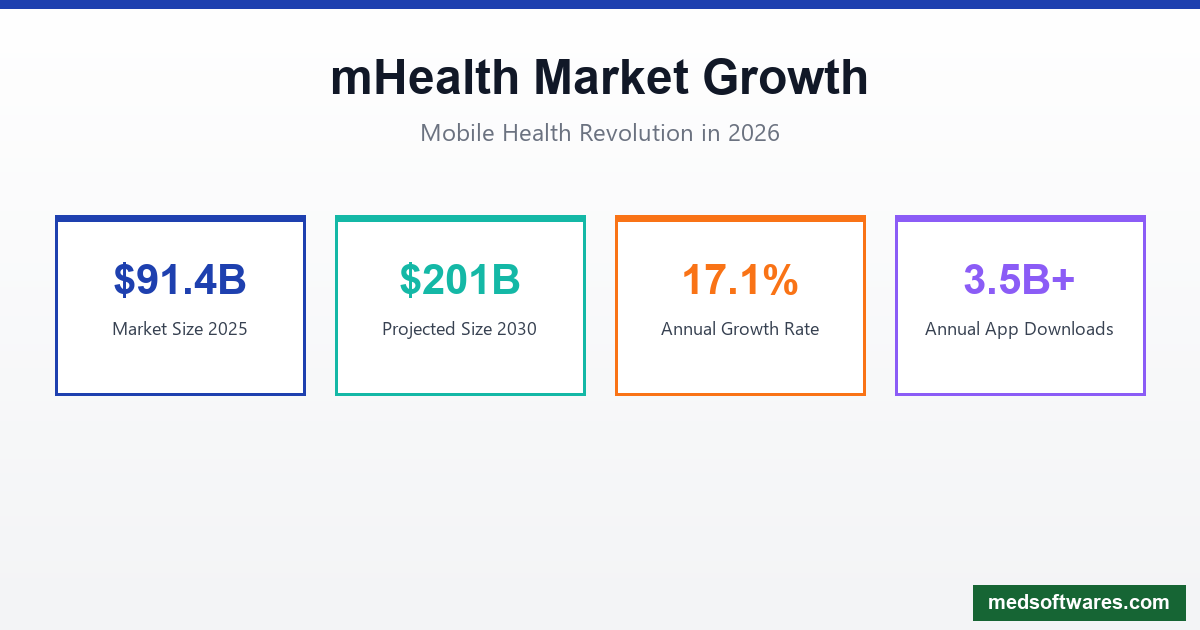
Mobile health (mHealth) is revolutionizing healthcare delivery. With the global mHealth market projected to grow from $91.4 billion in 2025 to $201.1 billion by 2030, hospitals and clinics that embrace mobile technology gain a significant competitive advantage.
What is mHealth?
mHealth (mobile health) encompasses all healthcare services, information, and data collection delivered through mobile devices—smartphones, tablets, wearables, and other wireless technologies.
mHealth Applications in Healthcare
- Patient-facing apps: Appointment booking, health tracking, communication
- Provider apps: Clinical decision support, EHR access, care coordination
- Administrative apps: Scheduling, billing, inventory management
- Remote monitoring: Chronic disease management, post-discharge follow-up
- Telemedicine: Virtual consultations, remote diagnosis
Why mHealth Matters in 2026
Market Growth
The numbers tell the story:
| Metric | Value | |--------|-------| | Market Size 2025 | $91.4 billion | | Projected 2030 | $201.1 billion | | Growth Rate (CAGR) | 17.1% | | Smartphone Penetration | 85%+ globally | | Healthcare App Downloads | 3.5B+ annually |
Driving Forces
- Patient Expectations: Consumers demand digital convenience
- Smartphone Ubiquity: Even in developing markets
- Pandemic Legacy: Accelerated digital adoption
- Chronic Disease Rise: Need for continuous monitoring
- Cost Pressures: Efficiency gains through automation
- Regulatory Support: Governments promoting digital health
Essential mHealth Features for Hospitals
1. Patient Mobile App
Appointment Management
- Search available slots
- Book appointments
- Receive reminders
- Reschedule or cancel
- Check-in before arrival
- Navigation to facility
Health Records Access
- View lab results
- See medication list
- Access visit summaries
- Download records
- Share with other providers
Communication
- Secure messaging with providers
- Appointment-related questions
- Prescription refill requests
- Push notifications
- Video consultation links
Payments
- View bills and statements
- Pay online
- Mobile money integration
- Payment history
- Insurance claim status
2. Provider Mobile App
Clinical Access
- EHR access from anywhere
- Patient lookup
- Lab result review
- Prescription management
- Clinical decision support
Care Coordination
- Team messaging
- Task assignment
- Handoff communication
- Referral management
- Care plan access
Scheduling
- View daily schedule
- Manage availability
- Accept/decline appointments
- Time tracking
- On-call notifications
3. Staff Mobile App
Operational Functions
- Inventory checks
- Equipment requests
- Maintenance reporting
- Supply ordering
- Asset tracking
Communication
- Team announcements
- Shift updates
- Emergency alerts
- Directory access
- Internal messaging
Telemedicine Integration
Virtual Care Capabilities
Telemedicine has evolved from emergency solution to standard care delivery:
Video Consultations
- HD video quality
- Screen sharing for results review
- Multiple participant support
- Recording options (with consent)
- Virtual waiting room
Asynchronous Care
- Secure messaging
- Photo/document sharing
- Voice messages
- Store-and-forward consultations
- AI triage support
Remote Monitoring
- Vital sign tracking
- Symptom reporting
- Medication adherence
- Activity monitoring
- Alert thresholds
Benefits for Providers
- Scalability: See more patients
- Flexibility: Work-life balance
- Reach: Serve remote areas
- Efficiency: Reduce overhead
- Continuity: Better follow-up
Benefits for Patients
- Convenience: No travel required
- Access: Specialists anywhere
- Timeliness: Faster appointments
- Comfort: Home environment
- Cost: Reduced expenses
Internet of Medical Things (IoMT)
Connected Device Ecosystem
The IoMT connects medical devices for real-time data collection and analysis:
Wearable Devices
- Smartwatches (heart rate, activity)
- Continuous glucose monitors
- Blood pressure cuffs
- Pulse oximeters
- Sleep trackers
Clinical Devices
- Remote patient monitors
- Connected diagnostic equipment
- Smart infusion pumps
- Digital stethoscopes
- Portable ECG devices
Data Integration
- Automatic capture: No manual entry
- Real-time alerts: Immediate notification of concerning values
- Trend analysis: Long-term pattern recognition
- Predictive insights: AI-powered risk assessment
- Care coordination: Shared data across providers
Digital Therapeutics (DTx)
Software as Treatment
Digital therapeutics are clinically validated software-based treatments, often prescribed alongside traditional medications:
Common Applications
- Diabetes management
- Mental health (anxiety, depression)
- Substance abuse recovery
- Chronic pain management
- Cardiovascular rehabilitation
Key Features
- Evidence-based interventions
- Personalized programs
- Progress tracking
- Provider dashboards
- Outcome measurement
AI in mHealth
Intelligent Features
AI transforms mobile health apps from passive tools to active health partners:
Symptom Checking
- Natural language input
- Guided assessment
- Triage recommendations
- Provider connection when needed
Personalization
- Tailored health content
- Customized reminders
- Adaptive interventions
- Risk-based outreach
Predictive Analytics
- Readmission risk
- Medication adherence prediction
- Disease progression modeling
- Resource utilization forecasting
Automation
- Appointment scheduling
- Documentation assistance
- Claim processing
- Prior authorization
Implementation Guide
Phase 1: Strategy (Weeks 1-2)
Define Objectives
- What problems are you solving?
- Who are the primary users?
- What outcomes do you expect?
- How will you measure success?
Assess Current State
- Existing digital capabilities
- Technical infrastructure
- Staff digital literacy
- Patient demographics
Select Approach
- Build vs. buy decision
- Integration requirements
- Budget constraints
- Timeline expectations
Phase 2: Development/Selection (Weeks 3-8)
If Building Custom
- Hire or partner with developers
- Design user experience
- Develop core features
- Conduct security review
- Test extensively
If Buying Solution
- Evaluate vendors
- Check references
- Negotiate contracts
- Plan integration
- Customize configuration
Phase 3: Integration (Weeks 9-12)
Technical Integration
- EHR/EMR connection
- Practice management sync
- Billing system link
- Device connectivity
Workflow Integration
- Map clinical workflows
- Define user roles
- Configure notifications
- Set up reporting
Phase 4: Launch (Weeks 13-16)
Staff Training
- Clinical staff sessions
- Administrative training
- IT support preparation
- Super-user development
Patient Onboarding
- Marketing campaign
- Registration support
- Tutorial materials
- Help desk setup
Phase 5: Optimization (Ongoing)
Monitor & Improve
- Track usage analytics
- Collect feedback
- Iterate on features
- Expand capabilities
Security Considerations
Mobile-Specific Risks
- Device theft or loss
- Unsecured Wi-Fi connections
- Malicious apps
- Jailbroken/rooted devices
- Screen shoulder surfing
Protection Measures
Device Security
- Mobile device management (MDM)
- Remote wipe capability
- Encryption requirements
- Jailbreak detection
- App containerization
Authentication
- Multi-factor authentication
- Biometric login (fingerprint, face)
- Session timeouts
- Secure token storage
- Certificate-based auth
Data Protection
- Encryption at rest
- Encrypted transmission
- Minimal data storage
- Secure offline access
- Audit logging
HospitalOS Mobile Capabilities
HospitalOS includes comprehensive mobile features designed for healthcare in developing markets:
Patient Mobile App
Core Features
- Appointment booking and management
- Lab results viewing
- Prescription history
- Secure messaging
- Bill viewing and payment
Local Optimization
- Low bandwidth performance
- Offline access to downloaded data
- SMS fallback for notifications
- USSD access for basic phones
- Mobile money payments (M-Pesa, MTN MoMo)
Multi-Language
- English, French, Swahili, Arabic
- Easy addition of local languages
Provider Mobile Access
Clinical Tools
- Patient lookup and records
- Lab result review
- Prescription management
- Appointment schedule
- Team communication
Offline Capability
- View patient records offline
- Queue prescriptions for sync
- Document consultations
- Access drug database
Administrative Mobile
Operations
- Inventory checks
- Supply requests
- Staff scheduling
- Report generation
- Alert management
Why HospitalOS Mobile
- Designed for resource-limited settings
- Works on any smartphone
- Offline-first architecture
- Local payment integration
- One-time pricing from $799
Measuring Success
Key Metrics
| Metric | Target | How to Measure | |--------|--------|----------------| | App Downloads | 50%+ of patients | Download count vs. patient base | | Active Users | 30%+ monthly | Monthly active users | | Digital Appointments | 25%+ | App bookings vs. total | | Patient Satisfaction | 4.5+ stars | App store ratings, surveys | | Provider Adoption | 80%+ | Staff using mobile features | | Response Time | Under 24 hours | Message response tracking |
ROI Indicators
Efficiency Gains
- Reduced phone calls
- Faster check-ins
- Automated reminders
- Fewer no-shows
Revenue Impact
- Increased appointment volume
- Better collections
- Telemedicine revenue
- Patient retention
Quality Improvements
- Medication adherence
- Follow-up compliance
- Patient engagement
- Care coordination
Future Trends
2026 and Beyond
Federated Learning: AI models trained without centralizing patient data
Voice Interfaces: Hands-free app interaction for clinical use
Augmented Reality: Visual assistance for procedures and education
5G-Enabled Care: Real-time remote monitoring and diagnostics
Blockchain Health Records: Patient-controlled, portable health data
Conclusion
mHealth is no longer optional for competitive healthcare delivery. Mobile apps improve patient engagement, operational efficiency, and clinical outcomes.
HospitalOS provides comprehensive mobile capabilities:
- Patient app for self-service and engagement
- Provider access for clinical mobility
- Offline capability for reliable operation
- Local payment integration for your market
- One-time pricing from $799
Join the mobile health revolution.

![Pharmacy POS System with Barcode Scanner & Mobile Payment Integration [2026 Guide]](/_next/image?url=%2Finfographics%2Fpharmacy-pos-features.png&w=2048&q=75)
