
![How to Reduce Pharmacy Inventory Waste by 40%: Complete Guide [2026]](/_next/image?url=%2Finfographics%2Freduce-pharmacy-inventory-waste.png&w=2048&q=75)
Pharmacy inventory waste silently drains profits. Expiring medications, overstocking, and poor tracking can cost pharmacies 15-25% of inventory value annually. Here's how to cut that waste dramatically.
The True Cost of Inventory Waste
Where Waste Happens
| Waste Type | Typical Loss | Preventable? | |------------|--------------|--------------| | Expired medications | 5-10% of inventory | 90%+ | | Overstocking | 10-20% excess inventory | 80%+ | | Theft/shrinkage | 1-3% of inventory | 70%+ | | Damaged goods | 1-2% of inventory | 60%+ | | Obsolete stock | 2-5% of inventory | 85%+ |
Financial Impact
Example: $200,000 Annual Inventory
| Waste Category | Rate | Annual Loss | |----------------|------|-------------| | Expiration | 8% | $16,000 | | Overstocking (tied capital) | 15% | $30,000 | | Shrinkage | 2% | $4,000 | | Total Waste | | $50,000 |
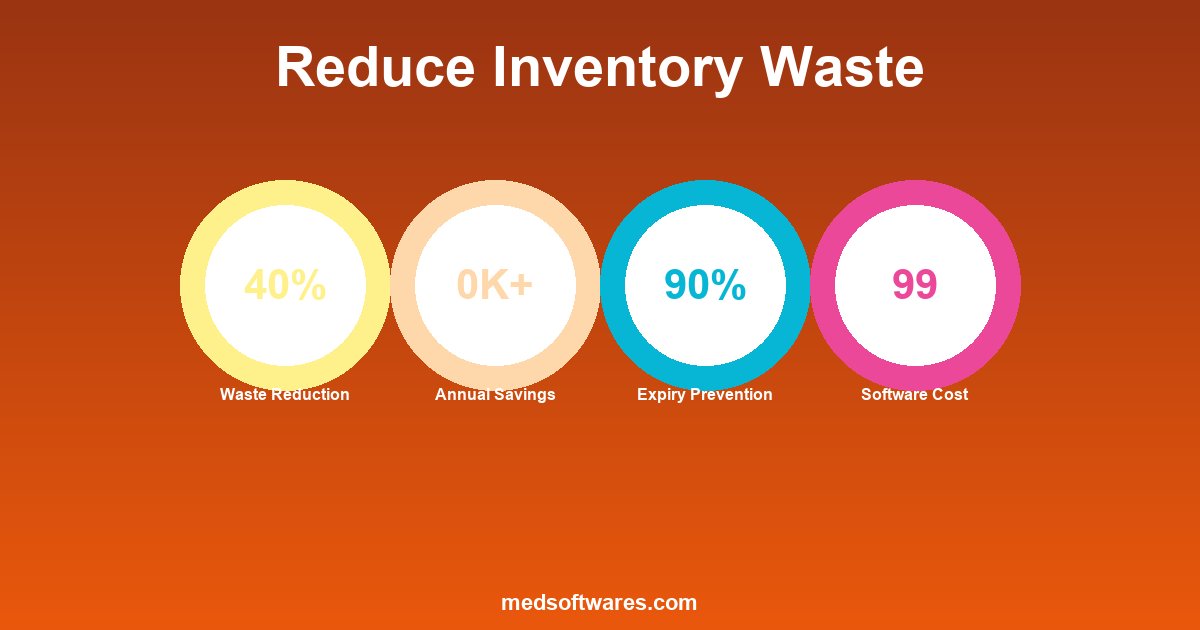
With proper management, you can recover $20,000-$40,000 annually.
Strategy 1: Expiration Management
The Problem
Medications expire on shelves because:
- No systematic tracking
- Poor rotation (FEFO)
- Ordering too much
- Hidden stock in storage
The Solution
Implement Expiration Tracking Software:
PharmaPOS tracks every item's expiration date and alerts you automatically.
| Alert Type | Timing | Action | |------------|--------|--------| | Early warning | 6 months before | Consider promotions | | Action alert | 3 months before | Prioritize dispensing | | Urgent alert | 1 month before | Return/discount/dispose | | Expired alert | On expiration | Remove from inventory |
Best Practices:
- Enter expiration dates on receipt — Every item, every time
- Use FEFO — First Expired, First Out
- Regular audits — Monthly expiration checks
- Negotiate returns — Work with suppliers on near-expiry items
- Discount near-expiry — Better to sell cheap than waste
Expected Results
| Metric | Before | After | Improvement | |--------|--------|-------|-------------| | Expiration loss | 8% | 2% | 75% reduction | | Near-expiry sales | 10% | 60% | 6x increase | | Return credits | $500/yr | $3,000/yr | 6x increase |
Strategy 2: Smart Reordering
The Problem
Manual ordering leads to:
- Ordering too much (ties up cash)
- Ordering too little (lost sales)
- Inconsistent stock levels
- Emergency orders (higher costs)
The Solution
Automated Reorder Points:
PharmaPOS calculates optimal reorder points based on:
- Historical sales velocity
- Lead time from suppliers
- Safety stock requirements
- Seasonal variations
| Parameter | Manual Guess | Software Calculated | |-----------|--------------|---------------------| | Reorder point | "When it looks low" | 15 units (based on data) | | Order quantity | "A few boxes" | 42 units (EOQ formula) | | Safety stock | Unknown | 8 units | | Accuracy | 50% | 95%+ |
Implementation Steps:
- Set up product categories
- Configure lead times by supplier
- Review historical sales data
- Set reorder points and quantities
- Enable automatic alerts
- Review and adjust monthly
Expected Results
| Metric | Before | After | Improvement | |--------|--------|-------|-------------| | Stockouts | 5/week | 1/month | 95% reduction | | Overstock | 20% excess | 5% buffer | 75% reduction | | Emergency orders | 10/month | 1/month | 90% reduction | | Carrying costs | High | Optimized | 30% reduction |
Strategy 3: ABC Analysis
The Problem
Treating all inventory equally wastes management effort:
- High-value items under-monitored
- Low-value items over-managed
- Stockouts on critical items
- Overstocking on slow movers
The Solution
Categorize Inventory by Value:
| Category | % of Items | % of Value | Management Level | |----------|------------|------------|------------------| | A Items | 10-20% | 70-80% | Tight control, frequent review | | B Items | 20-30% | 15-20% | Moderate control, monthly review | | C Items | 50-70% | 5-10% | Simple control, quarterly review |
PharmaPOS ABC Features:
- Automatic categorization
- Category-specific reorder rules
- Focused reporting
- Alert prioritization
Management by Category:
| Category | Reorder Frequency | Safety Stock | Review Cycle | |----------|-------------------|--------------|--------------| | A | As needed (often) | Higher | Weekly | | B | Regular schedule | Moderate | Monthly | | C | Bulk ordering | Lower | Quarterly |
Strategy 4: Supplier Management
The Problem
Poor supplier relationships cause:
- No returns for expiring stock
- Higher prices
- Long lead times
- Inconsistent supply
The Solution
Optimize Supplier Relationships:
| Strategy | Benefit | |----------|---------| | Negotiate return policies | Reduce expiration losses | | Consolidate orders | Volume discounts | | Track lead times | Better reorder points | | Multiple suppliers | Reduce stockout risk | | Payment terms | Improve cash flow |
PharmaPOS Supplier Features:
- Supplier performance tracking
- Lead time monitoring
- Price comparison
- Purchase history
- Return tracking
Negotiation Tips
For Returns:
- Ask about near-expiry return policies
- Request extended return windows
- Negotiate credit vs. replacement
For Pricing:
- Commit to volumes for discounts
- Ask about prompt payment discounts
- Compare across suppliers
Strategy 5: Cycle Counting
The Problem
Annual inventory counts:
- Disrupt operations
- Find problems too late
- Miss ongoing shrinkage
- Inaccurate between counts
The Solution
Continuous Cycle Counting:
Count a portion of inventory regularly instead of everything annually.
| Approach | Frequency | Coverage | |----------|-----------|----------| | A items | Weekly | All A items monthly | | B items | Bi-weekly | All B items monthly | | C items | Monthly | All C items quarterly |
PharmaPOS Cycle Count Features:
- Automatic count scheduling
- Variance tracking
- Adjustment logging
- Discrepancy alerts
Implementation
- Generate count list (by category)
- Count physical inventory
- Enter counts in system
- Review variances
- Investigate discrepancies
- Adjust if verified
- Document findings
Strategy 6: Storage Optimization
The Problem
Poor storage leads to:
- Damaged medications
- Hidden expired stock
- Inefficient picking
- Temperature issues
The Solution
Storage Best Practices:
| Practice | Benefit | |----------|---------| | Organized shelving | Faster picking, less damage | | FEFO arrangement | Earlier expiration in front | | Climate control | Prevent temperature damage | | Clear labeling | Reduce picking errors | | Regular cleaning | Identify issues early |
Layout Recommendations:
- Fast movers at eye level, easy access
- Slow movers on lower/higher shelves
- Refrigerated items properly stored
- Controlled substances secured
Software Features That Reduce Waste
PharmaPOS Inventory Features
| Feature | Waste Reduction | |---------|-----------------| | Expiration tracking | Alerts before items expire | | Auto reorder points | Prevents over/under-ordering | | ABC analysis | Focus on high-value items | | Batch/lot tracking | Full traceability | | Variance reporting | Identify shrinkage early | | Supplier management | Track performance, returns | | Low stock alerts | Prevent stockouts | | Overstock reports | Identify excess inventory |
ROI of Inventory Software
Investment: $499-$799 (PharmaPOS one-time)
Annual Savings:
| Reduction Area | Savings | |----------------|---------| | Expiration waste | $5,000-$15,000 | | Overstock reduction | $3,000-$10,000 | | Stockout prevention | $2,000-$5,000 | | Labor efficiency | $2,000-$5,000 | | Total Annual | $12,000-$35,000 |
ROI: 1,500-4,400% in first year
Implementation Roadmap
Month 1: Foundation
- [ ] Implement inventory software
- [ ] Enter all products with expiration dates
- [ ] Set up basic reorder points
- [ ] Train staff on new procedures
Month 2: Optimization
- [ ] Run ABC analysis
- [ ] Refine reorder points based on data
- [ ] Establish supplier return procedures
- [ ] Begin cycle counting
Month 3: Advanced
- [ ] Analyze first variance reports
- [ ] Adjust safety stock levels
- [ ] Negotiate improved supplier terms
- [ ] Review and refine processes
Ongoing
- Weekly: Review expiration alerts, A item counts
- Monthly: Full review, adjust parameters
- Quarterly: Supplier review, strategy assessment
- Annually: Full process evaluation
Measuring Success
Key Metrics to Track
| Metric | Baseline | Target | Track | |--------|----------|--------|-------| | Expiration rate | ___% | Under 2% | Monthly | | Stockout frequency | __/week | Under 1/month | Weekly | | Inventory turnover | x/year | 12x+ | Monthly | | Carrying cost | $ | 20% reduction | Quarterly | | Shrinkage | ___% | Under 1% | Monthly |
Expected Timeline
| Timeframe | Expected Improvement | |-----------|---------------------| | Month 1 | Baseline established | | Month 3 | 15-20% waste reduction | | Month 6 | 30-35% waste reduction | | Month 12 | 40%+ waste reduction |
Frequently Asked Questions
How quickly will I see results?
Most pharmacies see measurable improvement within 30 days of implementing proper tracking. Full optimization typically takes 3-6 months.
What about controlled substances?
PharmaPOS includes specific tracking for controlled substances with full audit trails and compliance reporting.
Can I track multiple locations?
Yes, PharmaPOS Enterprise supports multi-location inventory with transfer tracking between stores.
What if I have thousands of products?
PharmaPOS handles unlimited products. Focus initial efforts on A items (highest value), then expand.
Get Started
Stop losing money to inventory waste.
PharmaPOS provides all the tools you need:
- Expiration tracking and alerts
- Automatic reorder points
- ABC analysis
- Cycle counting
- Supplier management
- Comprehensive reporting
One-time investment: $499-$1,499 Expected annual savings: $12,000-$35,000


![Hospital Software RFP Template: Complete Guide & Free Template [2026]](/_next/image?url=%2Finfographics%2Fhospital-software-rfp-template.png&w=2048&q=75)